

Dogtooth tuna fishing in Vanuatu is unlike almost any other offshore pursuit. The island chain’s sheer volcanic drop-offs plunge directly to the ocean floor, creating the kind of deep-water structure that concentrates trophy-class dogtooth tuna year-round. Targeting them demands the right techniques — jigging, popping, and live baiting — executed with precision, the right gear, and the physical conditioning to match one of sportfishing’s most powerful adversaries.
Key Takeaways
- Vanuatu ranks among the world’s top destinations for targeting giant dogtooth tuna offshore.
- Jigging, popping and live baiting are the 3 preferred techniques for targeting dogtooth tuna.
- Dogtooth tuna fight with brutal power, making them one of sportfishing’s most prized catches.
- Heavy jigging rods (PE 10+), high-capacity spinning reels, and abrasion-resistant assist cord are non-negotiable gear requirements.
- Assist cord failure is the single most common cause of fish lost at boatside — inspect and replace it between every drop.
- Dogtooth tuna fishing is physically demanding; upper-body fitness and smart pacing are as important as technique.
- Vanuatu’s steep volcanic drop-offs, strong current lines, and year-round bait cycles create ideal conditions for trophy-class fish.
- Ocean Blue Fishing Adventures operates out of Port Havannah, placing anglers close to productive reef edges and deep drop-offs with minimal travel time.
What Makes Vanuatu Ideal for Dogtooth Tuna?

Vanuatu is ideal for Dogtooth Tuna because the islands sit right alongside deep water, steep drop-offs, and reef-edge structure—the exact terrain Doggies use to hunt and then power back into when they’re hooked. Strong tide flow and current lines push bait along these edges and channels, creating predictable feeding zones where Dogtooth can show up hard and fast. Add the fact that you can often reach productive reef systems without spending half the day travelling, and it becomes a destination where anglers can consistently focus on the right water: deep reef edges, pressure points, and current-washed structure that suits Dogtooth Tuna behaviour.
Why Do Dogtooth Tuna Grow So Large in Vanuatu’s Waters?
Dogtooth Tuna can grow big in Vanuatu largely because the environment supports everything a top-end predator needs: reliable food, strong water movement, and the right structure to hunt efficiently.
Vanuatu’s islands sit close to deep ocean water, with reef walls, drop-offs, and channels that create natural funnels for bait. When current pushes along these edges, it concentrates baitfish and reef species in tight zones, which lets Dogtooth feed hard without roaming huge distances. That consistent access to high-protein prey is a major ingredient for growth.
The other piece is habitat. Dogtooth are built to live around hard structure—they can sit on pressure points, reef corners, and deep edges, then ambush and retreat back into depth. In areas where that structure is extensive and connected (like many parts of Vanuatu’s reef systems), fish can hold in productive territory for long periods, feeding regularly and putting on size.
Finally, Vanuatu’s warm tropical conditions support year-round bait cycles, so the system doesn’t have the same long “shut down” periods you see in colder fisheries. That doesn’t mean every Dogtooth is a giant—but it does mean the ingredients for growing big fish are present more consistently: food, current, and structure, all in the same neighbourhood.
What Underwater Features Make Vanuatu’s Drop-Offs So Productive?
Vanuatu’s drop-offs are productive because they’re where reef structure meets deep blue water, creating a natural highway for bait and predators. Steep walls, ledges, and reef points form “pressure edges” that concentrate current, which in turn stacks baitfish along the face of the reef. Add in channels and corners that funnel water movement, and you get consistent ambush zones where pelagics and reef-edge predators patrol and feed.
For Ocean Blue guests, a big advantage is location: we’re based out of Port Havannah, so many of these reef edges and deep drop-offs are close by, meaning less travel time and more time fishing the most productive structure while tides and current are doing the right thing.
What Prerequisites and Gear Do You Need?
The table below summarises the essential gear and physical prerequisites for targeting dogtooth tuna in Vanuatu:
| Gear / Prerequisite | Specification | Why It Matters |
|---|---|---|
| Jigging Rod | PE 10+ | Must withstand sustained fights at depth along volcanic drop-offs; breakage is common |
| Spinning Reel | Size 10,000+ reel with high drag capacity | Dogtooth tuna make powerful, sustained runs that stress drag systems to their limits |
| Abrasion resistant cord | Jigs equipped with heavy duty assist hook cord | Dogtooth tuna have sharp teeth, by using abrasion resistant assist hook cord you reduce chance of getting bitten off |
| Spare Rods & Reels | Multiple backups recommended | Broken rods and blown reels are standard, not worst-case, on a single dogtooth trip |
| Topwater / Popper Lures | Rigged with heavy-gauge hardware | Standard hardware gets bent out — Strong hooks and split rings are a non negotiable |
| Physical Conditioning | Baseline upper-body fitness | Jigging at depth combined with fighting heavy fish exhausts even experienced anglers quickly |
How Physically Demanding Is Dogtooth Tuna Fishing?
Dogtooth Tuna fishing is physically demanding, mainly because the fight is short, brutal, and often happens right on reef edges—when a Doggie eats, it usually powers straight back toward structure, so you’re under heavy load immediately. The grind also comes from working heavy jigs/lures repeatedly, setting hard, and keeping your balance in swell while you maintain pressure.
Ocean Blue helps by setting you up with the right gear on board, coaching technique and body position (so you’re not burning out your arms or losing leverage), and running the day around smart rotations and pacing—especially if you’re jigging. Our skippers also choose locations and drifts based on conditions so you’re not fighting the ocean and the fish at the same time, which makes Dogtooth fishing far more manageable and effective.
Gear checklist before departure:
- Heavy jigging rods rated for deep-reef applications
- High-capacity spinning reels with strong drag systems
- Heavy-duty, abrasion-resistant assist cord on all jigs
- Spare rods and reels to account for inevitable breakage
“Dogtooth tuna don’t give you a second chance — the fish that gets away at the boat is almost always the result of a compromised assist cord or an angler who ran out of gas before the fish did. Preparation and fitness aren’t optional extras; they’re the difference between a trophy and a story about the one that got away.”
Spike Lieberman – Ocean Blue Fishing
How Do You Execute Jigging Techniques Effectively?
What Steps Produce Consistent Hookups on Dogtooth Tuna?
Knife jigging is all about rhythm and pace—think controlled chaos rather than just ripping the rod around. Drop the knife jig to the zone, then work it with sharp, repeatable lifts while staying in contact on the drop, because that’s when a lot of bites happen. A good starting rhythm is short, punchy strokes at a steady tempo (not frantic), then mix in a brief pause or a couple of faster pumps to make the jig dart and flash like a fleeing baitfish. If the current’s pushing hard or fish are fired up, lift the pace and keep it tight; if they’re sulking or sitting deeper, slow it down, lengthen the drop, and keep the cadence smooth and consistent—nice work comes from staying in rhythm.
Follow these steps before and during each drop:
- Select a jig that mimics local baitfish or squid in profile and color.
- Inspect the assist cord before every drop — dogtooth tuna teeth chafe through cord, and anglers have lost fish at boatside after cord failure went undetected.
- Replace any frayed or nicked assist cord immediately; do not fish a compromised rig.
- Drop the jig to the target depth along the volcanic structure.
- Work the jig with sharp, rhythmic lifts to imitate fleeing prey.
- Maintain constant tension on the retrieve to prevent slack that allows hooks to pull free.
Why Does Assist Cord Condition Matter So Much?
Assist cord failure is a documented risk when targeting dogtooth tuna in Vanuatu. The species’ sharp teeth chafe through cord during the fight. The damage often goes unnoticed until a fish is lost at the boat. Checking and replacing assist cord between drops eliminates this preventable loss.
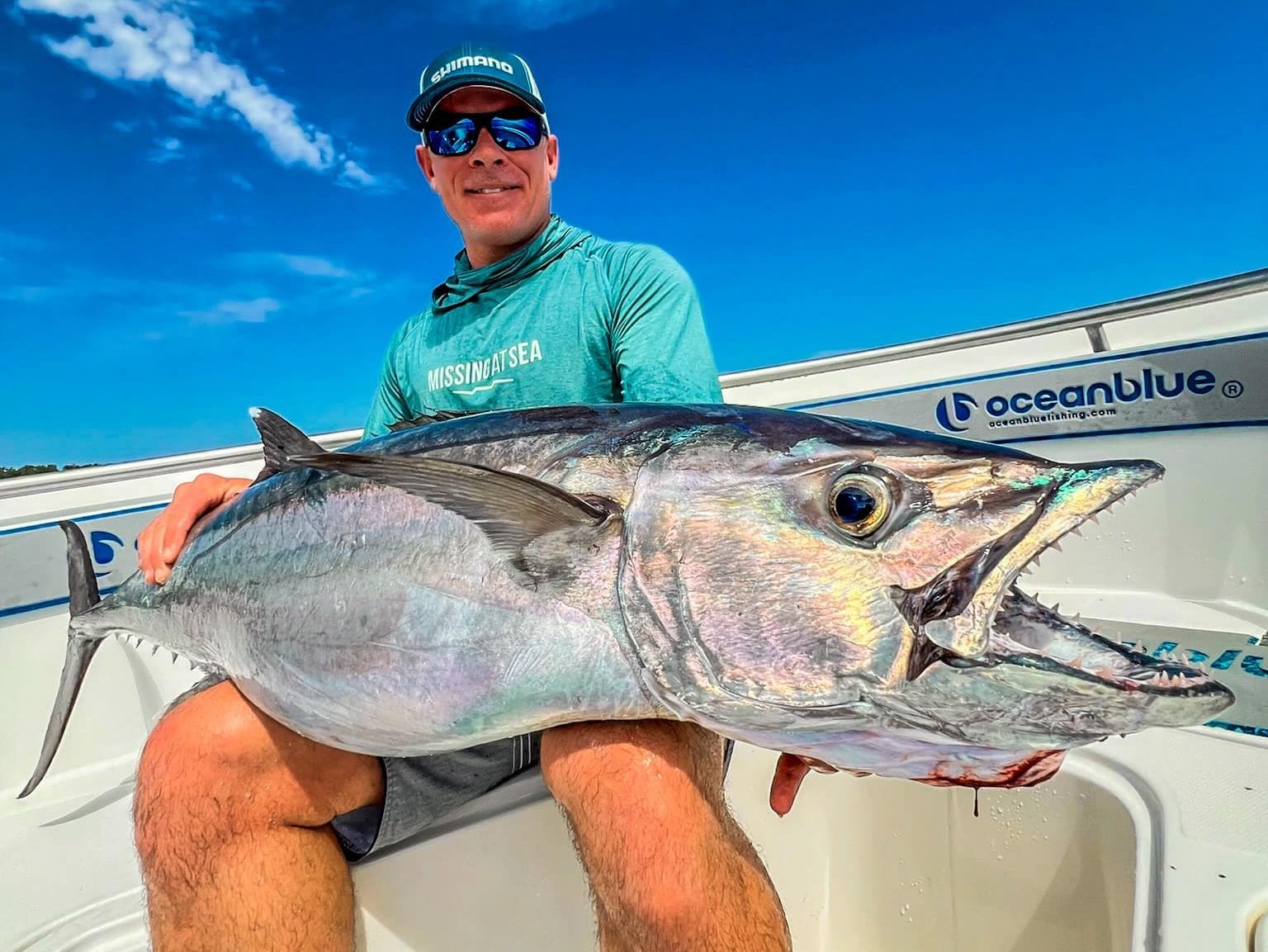
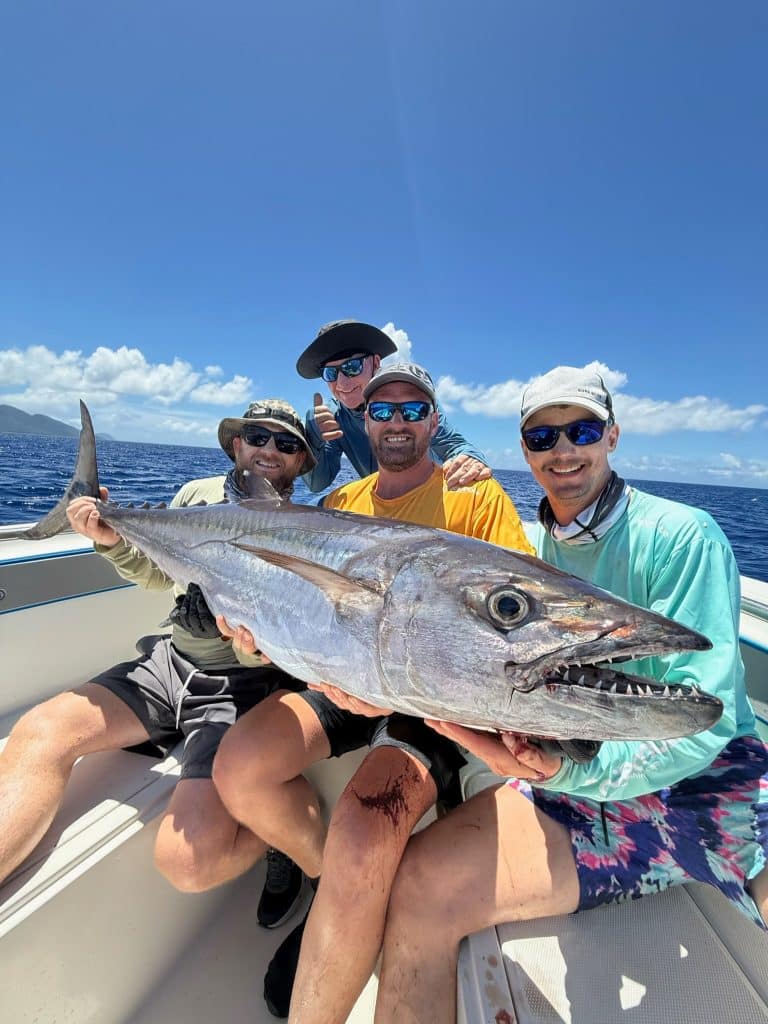
Ocean Blue Fishing Adventures has guided clients to trophy-class dogtooth tuna in Vanuatu. Proof that the destination holds exceptional fish for anglers who execute jigging fundamentals correctly.
How Do You Apply Popping and Topwater Techniques?
Dogtooth Tuna Fishing Techniques Vanuatu anglers rely on center on two proven surface methods: popping and topwater presentations. Skipping these techniques means missing the most explosive strikes Vanuatu’s offshore environment produces — and losing access to trophy-class fish that feed aggressively at the surface.
Popping pairs directly with jigging as a primary approach for targeting dogtooth tuna and giant trevally in Vanuatu’s waters. What Gear Prerequisites Do Anglers Need Before Popping in Vanuatu?
Dogtooth tuna belong to the bonito family and carry distinctive canine-like teeth capable of severing standard rigging. Anglers must rig topwater lures with heavy-gauge hardware and abrasion-resistant connections before casting. Failure to do so results in bite-offs at the boat, costing the fish entirely.
How Do Anglers Execute a Topwater Popping Retrieve Step by Step?
Follow these steps in order for an effective popping presentation in Vanuatu’s blue-water environment:
- Select the target zone — position the vessel over known structure, FADs, or volcanic drop-offs where pelagic species concentrate.
- Cast beyond the strike zone — land the popper past the target area to avoid spooking fish on entry.
- Engage the retrieve immediately — begin a rhythmic, aggressive rod-pump cadence to create surface disturbance and spray.
- Maintain consistent rod angle — keep the rod tip low and drive the popper across the surface without slack.
- Set the hook hard — dogtooth tuna require a firm, sustained strike to penetrate past the jaw structure.
Ocean Blue Fishing Adventures guides guests through each of these steps on Vanuatu charters, combining local knowledge with well-equipped sportfishing vessels for maximum results on the water.
What Common Mistakes Should Vanuatu Anglers Avoid?
Anglers pursuing Dogtooth Tuna Fishing Techniques Vanuatu waters demand most commonly underestimate two critical factors: the raw physical punishment of fighting a large dogtooth tuna. The technical failure of underpowered hardware, line and setup. Correcting these errors separates anglers who land trophy fish from those who lose them at boatside.
Dogtooth tuna rank pound for pound among the hardest-fighting fish an angler encounters anywhere in the world. Anglers who arrive unprepared for that sustained, brutal resistance fatigue quickly, increasing the risk of dropped rods, blown drags, and lost fish. A trophy-class dogtooth tuna is considered extraordinarily rare and hard to come by globally — arriving underprepared means squandering a once-in-a-lifetime opportunity.
What Gear Mistake Costs Anglers the Most Fish?
Assist cord failure is the single most damaging technical error in saltwater jigging for dogtooth tuna. Dogtooth tuna teeth regularly chafe through standard assist cord, causing fish to be lost right at boatside — the most frustrating point in any fight. Anglers at every experience level debate cord selection, yet the evidence from boatside losses consistently points to undersized or low-abrasion-resistance cord as the culprit.
How Does Expert Guidance Reduce These Errors?
Ocean Blue Fishing Adventures, a specialist Vanuatu sport-fishing outfitter with more than 30 years of experience, provides on-the-water guidance that helps anglers avoid these technical mistakes. The operation’s local Vanuatu team identifies gear deficiencies before departure. Coaches clients through the physical demands of fighting large dogtooth tuna, protecting every angler’s chance at a trophy-class fish.
FAQ
Jigging, popping and live baiting are the 3 preferred techniques, targeting dogtooth tuna along Vanuatu’s sheer volcanic drop-offs that plunge directly to the ocean floor.
Dogtooth tuna can grow to over 130kg and 6.5 feet in Vanuatu’s waters, with Ocean Blue Fishing Adventures clients successfully landing some of these trophy-class specimens.
Abrasion-resistant assist cord is non-negotiable. Ocean Blue’s field experience in Vanuatu confirmed multiple fish lost boat-side due to assist cord chafing through from contact with the fish.
Conclusion
Dogtooth tuna fishing in Vanuatu stands apart from virtually every other offshore pursuit — the combination of sheer volcanic drop-offs, strong current lines, and year-round bait cycles creates an environment where trophy-class fish are genuinely within reach for prepared anglers. Success, however, is never guaranteed by the destination alone. It demands the right gear — heavy jigging rods, high-capacity reels, and abrasion-resistant assist cord — matched with sound technique across both jigging and topwater popping presentations, and the physical conditioning to sustain the fight when a large dogtooth powers hard toward structure.
Avoiding the common mistakes that cost anglers fish at the boat — underestimating the physical demands, neglecting assist cord condition, and arriving with inadequate hardware — is just as important as executing the right retrieve. With more than 30 years of specialist experience on Vanuatu’s waters, Ocean Blue Fishing Adventures puts clients in the best possible position to land a trophy dogtooth tuna: over productive structure, with well-maintained gear, and the guidance to make every drop count.
Start Planning Your Vanuatu Fishing Adventure
Whether you are launching your first trip or returning to Vanuatu, Ocean Blue Fishing Adventures offers guided fishing experiences tailored to diverse fishing styles, target species, and experience levels. Discover our Fishing Adventures to select your ideal trip, compare Trips & Pricingfor the best value, or Contact Us to start planning your custom Vanuatu fishing adventure today.