

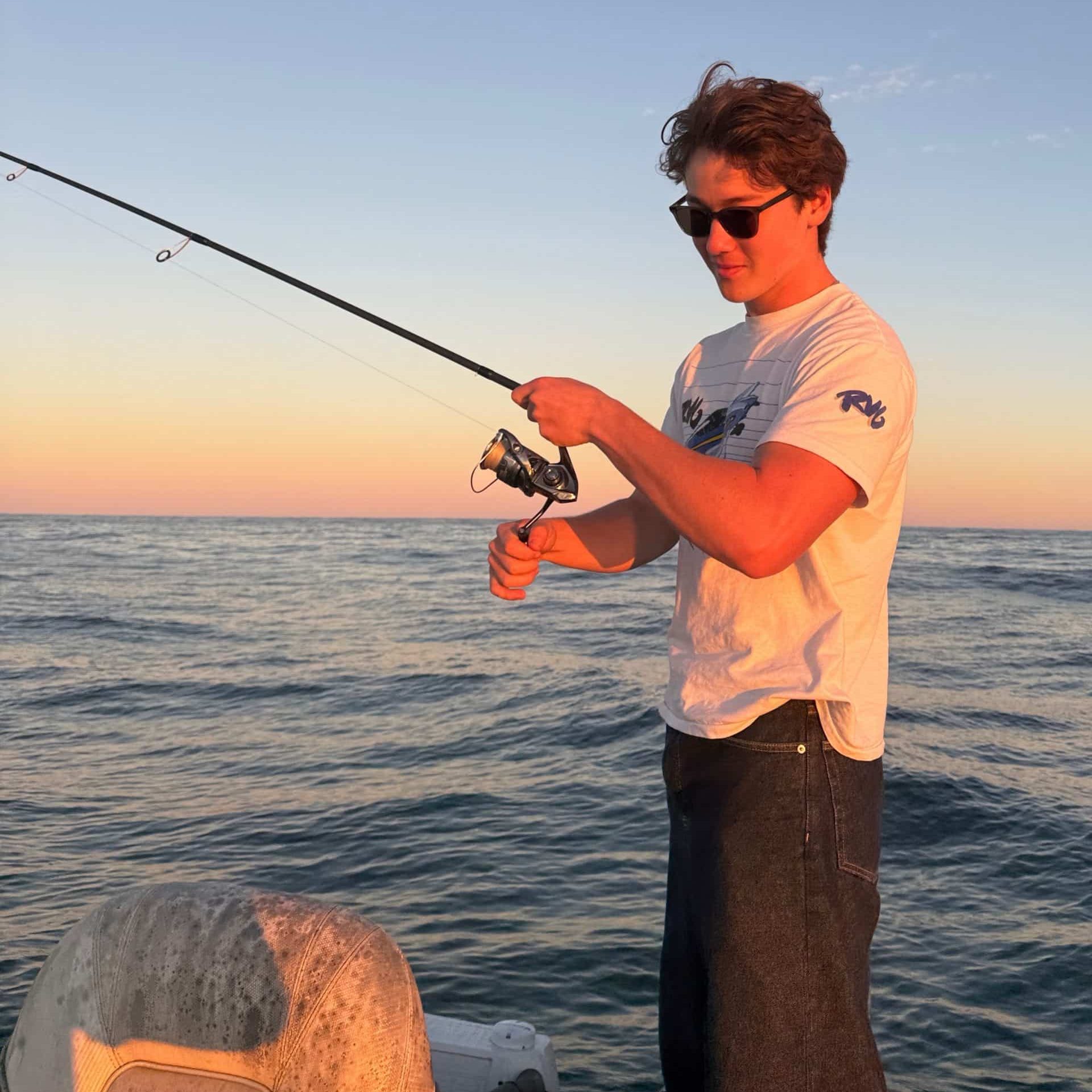
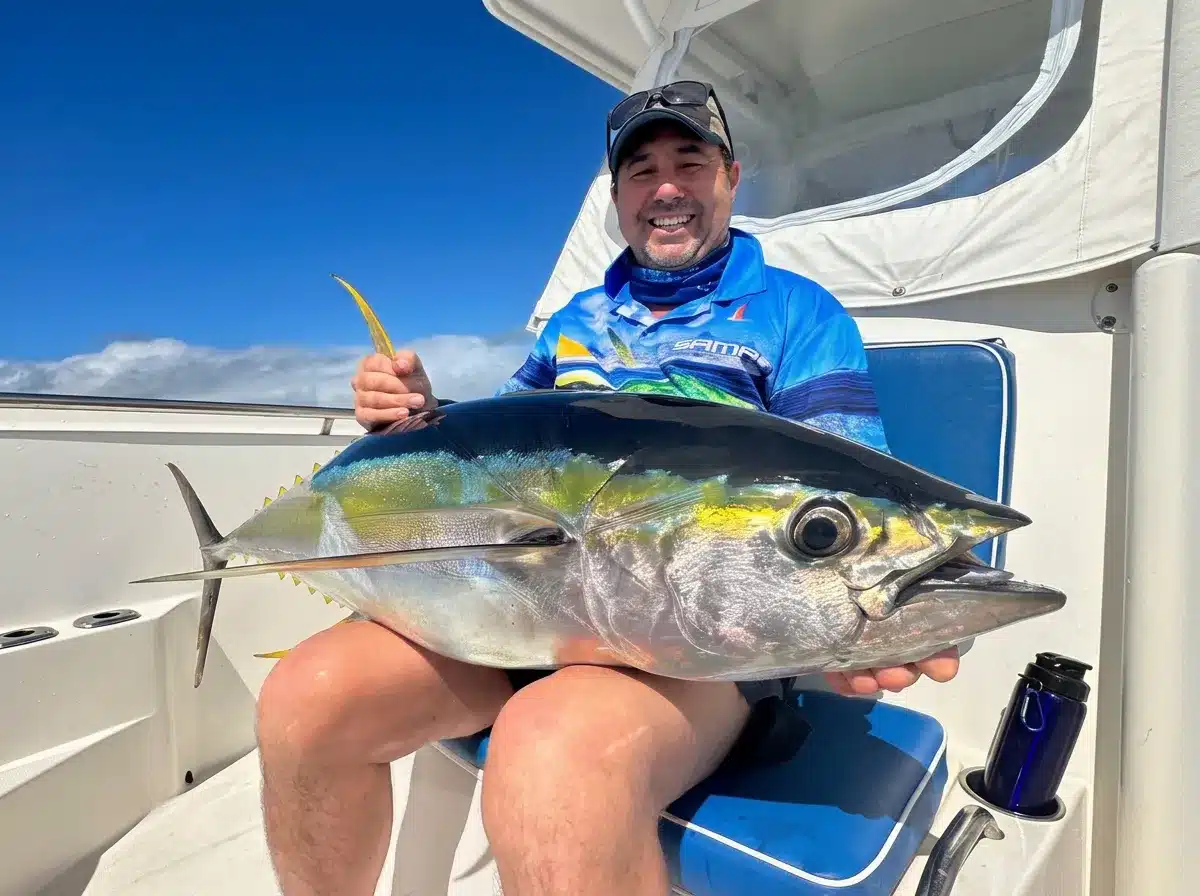
If you are planning a Yellowfin Tuna fishing trip to Vanuatu, the best time to target larger fish with us is generally January to April, when warm water, calmer sea windows and strong pelagic activity align. Yellowfin remain part of our year-round mixed-species fishery, and we adapt between casting stickbaits, working poppers, dropping jigs and trolling according to the bait, conditions and fish activity we find on the day.
At Ocean Blue, we fish Vanuatu’s blue water from our EdgeWater 318CC sport fishers, with Trees and Fishes Private Retreat as our lodge base. We provide the core charter gear and guide every part of the day, so experienced anglers can bring favourite lures while first-timers can arrive ready to fish.
Key Takeaways
Why Fish for Yellowfin Tuna in Vanuatu?
Yellowfin Tuna are one of the defining blue-water species in Vanuatu. They combine speed, power and the visual excitement of a fish that can erupt beneath a surface lure, turn a bait school into chaos or hit a jig below the boat.
At Ocean Blue, we target Yellowfin Tuna as part of Vanuatu’s diverse blue-water fishery. Our fishing seasons guide identifies January to April as our prime big-fish season, when we target Big Yellowfin Tuna alongside Monster GT, Dogtooth Tuna and Blue Marlin.
For visiting anglers, the appeal is variety. A Yellowfin-focused day can involve watching birds work above bait, scanning current lines, casting at a surface bust-up, trolling a blue-water edge or switching to a vertical presentation when fish sound. We choose the method by reading what the ocean is giving us rather than following a fixed script.
When Is the Best Time to Catch Yellowfin Tuna in Vanuatu?
Yellowfin are available in Vanuatu’s broader year-round fishery. The best window depends on whether your priority is the prime big-fish period, maximum species variety or late-season pelagic activity.
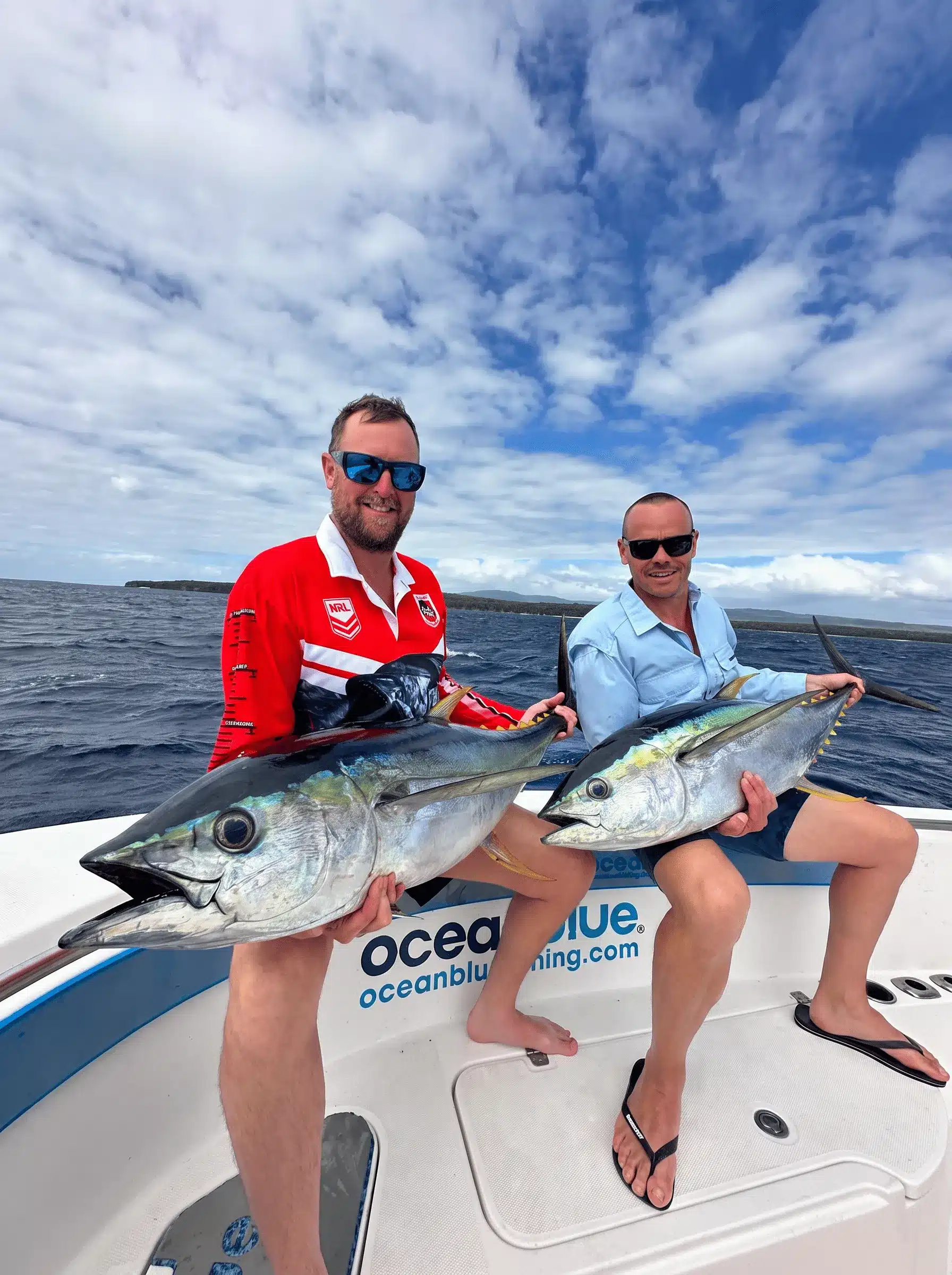
The Vanuatu Tourism Office also identifies December–February as a favourable Yellowfin Tuna and marlin period, and March–May as a strong all-species window. These timeframes complement our own three-season guide, but weather and wild-fish behaviour always shape each individual trip. We will discuss your preferred dates, target species and trip style before building your itinerary.
How Do We Catch Yellowfin Tuna in Vanuatu?
We use several techniques because Yellowfin do not feed in one way every day. Fish may be visible and aggressive on the surface, holding under birds, travelling along a current boundary, concentrated near a FAD or sitting deeper below the boat. The right presentation is the one that reaches the fish where they are feeding.
1. Casting Stickbaits at Surface-Feeding Yellowfin
When we see surface activity, bait or birds working, stickbaits are one of our most important Yellowfin tools. In our tackle guide, we identify stickbaits as a key lure for Yellowfin Tuna because they imitate an injured baitfish and can be worked quickly across the surface to provoke a reaction strike.
We use the PE7–8 casting setup as our primary all-rounder for this work. It allows anglers to cast a serious stickbait all day while retaining the backbone required for a hard-fighting pelagic fish. The goal is a controlled cast, a convincing baitfish retrieve and a calm response when a Yellowfin commits.
2. Working Poppers When a Stronger Surface Signal Helps
Poppers create splash, noise and a bubble trail. When the sea has texture or we want to make a lure more obvious around active fish, a popper can be a powerful way to call a strike. Our spring-to-summer guide includes both stickbaits and poppers for Yellowfin Tuna around offshore bust-ups, birds and FADs.
We select the popper size and retrieve to suit the conditions and the tackle in your hands. A clear plan matters more than casting the largest lure in the box: we want a lure you can cast confidently and work effectively for as long as the opportunity lasts.
3. Dropping Knife Jigs When the Surface Bite Ends
A bust-up can disappear quickly. If Yellowfin shift below the surface, we can move from casting to vertical jigging. Our September-to-December guide recommends knife jigs below birds when surface activity shuts down, and our general tackle guide lists light jigging as a suitable method for Yellowfin Tuna around inshore reefs and FADs.
The crew will choose jig weight according to depth, current and drift. Your role is to keep the presentation in the strike zone, work the jig with purpose and stay ready: a Yellowfin hit on the drop or during the retrieve can be immediate.
4. Trolling When Fish Are Deeper or Spread Out
Trolling helps us cover ground, search productive water and present a lure consistently when fish are deeper or surface activity is scattered. Around Yellowfin, we may use small skirts and other trolling presentations as the conditions dictate.
Trolling is also a useful transition technique. It lets us move between current edges, bait zones and offshore areas while keeping a spread working, then change to casting or jigging when the fish reveal their position.
“Yellowfin don’t fish the same way two days in a row. Some mornings you’re casting into a bust-up on the surface, other times you’re working a jig well below the boat. You read the water and let the fish tell you what to do.”
Spike Lieberman, Ocean Blue Fishing
“Yellowfin don’t fish the same way two days in a row. Some mornings you’re casting into a bust-up on the surface, other times you’re working a jig well below the boat. You read the water and let the fish tell you what to do.” — Spike Lieberman, Ocean Blue Fishing
What Tackle Do We Use for Yellowfin Tuna?
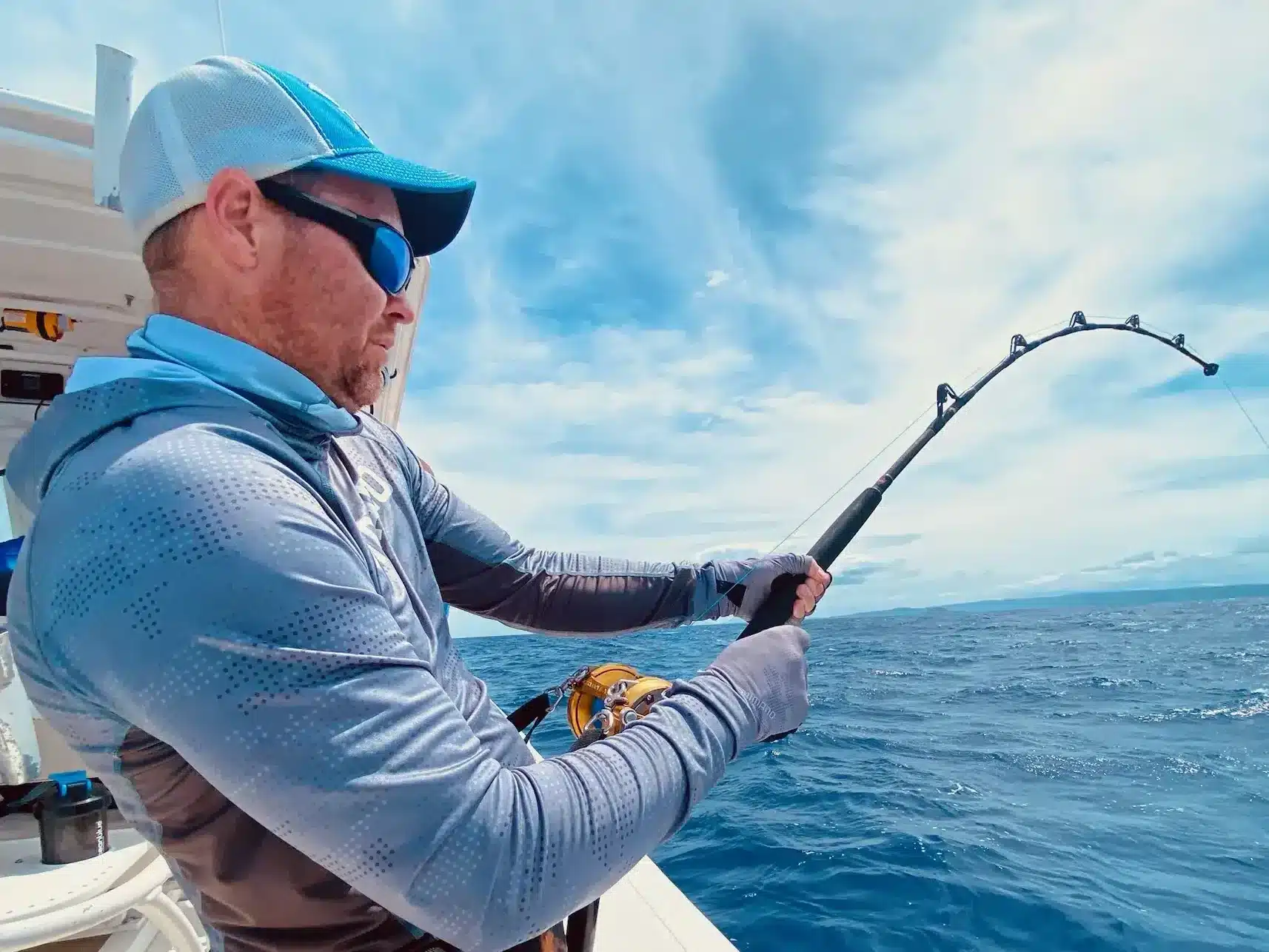
We provide the core rod-and-reel gear required for our charter fishing program. Our published setup list includes dedicated heavy-popping, medium-jigging, light-jigging, light-casting, game-fishing and deep-drop combinations on every boat.
For Yellowfin, the right outfit depends on whether we are casting, jigging or trolling. The following table reflects our published guide and the way we use each setup.
Our boats are equipped with PENN charter gear, and our guides handle the practical work that makes a fishing day run smoothly: selecting the area, rigging, reading the water, setting the spread and coaching anglers through the fight. Guests are welcome to bring personal rods or favourite lures if they enjoy using their own equipment. Please tell us before travel so we can help you pack a selection that suits your target species and planned fishing styles.
What Lures Should I Bring for Yellowfin Tuna in Vanuatu?
A personal lure pack should give you distinct actions rather than a large number of duplicates. We suggest bringing a mix that lets you cast a natural baitfish profile, make a stronger surface disturbance and fish below the surface when required.
Our detailed Vanuatu lure guide explains the broader popper, stickbait and jig categories we use. The most useful lures are durable, correctly rigged and matched to the rod and line you plan to fish.
What Should I Expect on an Ocean Blue Yellowfin Tuna Trip?
A Yellowfin Tuna trip with us is a complete blue-water sport-fishing experience rather than one fixed technique. We plan each day around the best available opportunities, which can include trolling, casting and jigging for a mixed pelagic lineup of Yellowfin Tuna, wahoo, mahi mahi, bigeye tuna, marlin and sailfish.
Our lodge-based Blue Water Sport Fishing Adventures are available as 4-night, 5-night and 6-night itineraries. We fish from Trees and Fishes Private Retreat, so the day begins at our lodge base and finishes back at the retreat, where guests can unwind after time on the water.
Fish are wild and the conditions change, so we never frame one method or species as guaranteed. What we do provide is a tailored program, proven equipment, a capable boat and a crew with the local experience to put you in the most productive water available.
Frequently Asked Questions
For guests prioritising larger Yellowfin Tuna, we recommend January to April. Vanuatu Tourism also identifies December to February as a favourable Yellowfin Tuna and marlin period. Yellowfin remain available in the broader year-round fishery, and they begin building in size again through late spring into December.
Yes. We use stickbaits and poppers around offshore bust-ups, birds and FADs when Yellowfin are feeding near the surface. Stickbaits give us a fast, baitfish-style presentation, while poppers provide a stronger surface signal when conditions call for it.
Yes. When Yellowfin move deeper or surface activity ends, we can use vertical jigs to reach fish below the bait and birds. The crew selects jig weight according to the depth, current and drift.
We provide the core charter rod-and-reel setups needed for the program. Guests who have favourite lures or personal heavy-tackle combinations are welcome to bring them; please speak with us before travel so we can help you select gear that suits your target species and trip plan.
It can be. We tailor the fishing style to each guest’s experience, coach anglers through the technical aspects and provide the core equipment. A Yellowfin fight can be demanding, so we will choose an appropriate setup and presentation for your confidence and ability. If you’re new to sport fishing, read our Vanuatu fishing guide for first-time anglers for more advice on what to expect.
Plan Your Yellowfin Tuna Fishing Adventure With Us
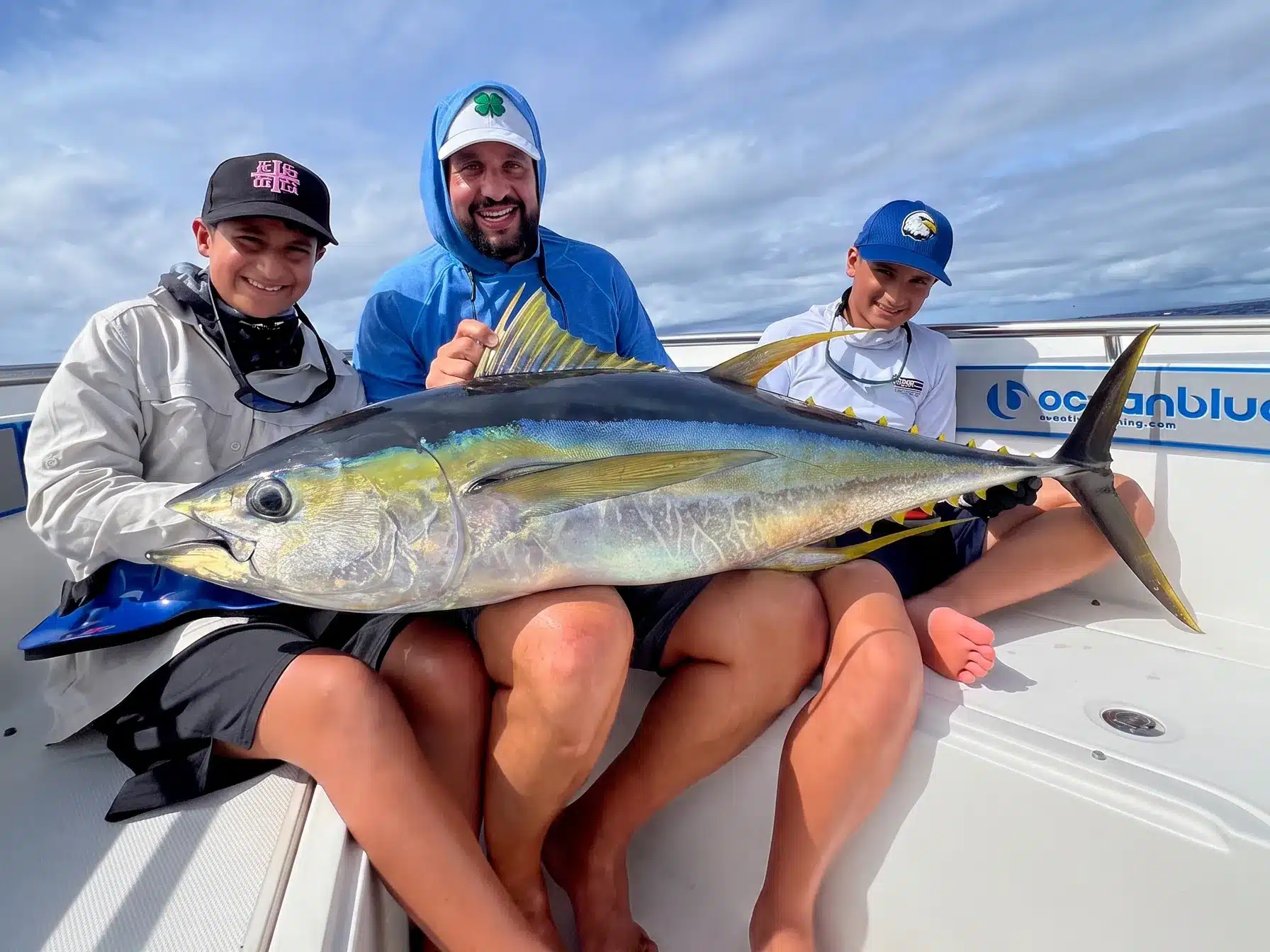
Yellowfin Tuna fishing rewards anglers who are ready to adapt. One moment we may be watching birds over a bait school and casting stickbaits; the next we may be working a current edge, dropping a jig below the boat or trolling toward a new piece of blue water.
That variety is exactly why Vanuatu is such a compelling destination — and why we build every trip around the conditions and the fish rather than a rigid itinerary. Tell us when you would like to travel, the species you most want to target and whether you have personal tackle you would like to fish. We will help you plan the right Vanuatu Yellowfin Tuna experience.
Explore our Vanuatu Blue Water Sport Fishing Adventures and request your tailored trip plan.
This guide reflects our published seasonal, technique and tackle guidance when it was updated. Wild-fish behaviour, weather, currents and onboard lure arrangements vary; our crew makes the final on-water decisions for each day’s conditions.