

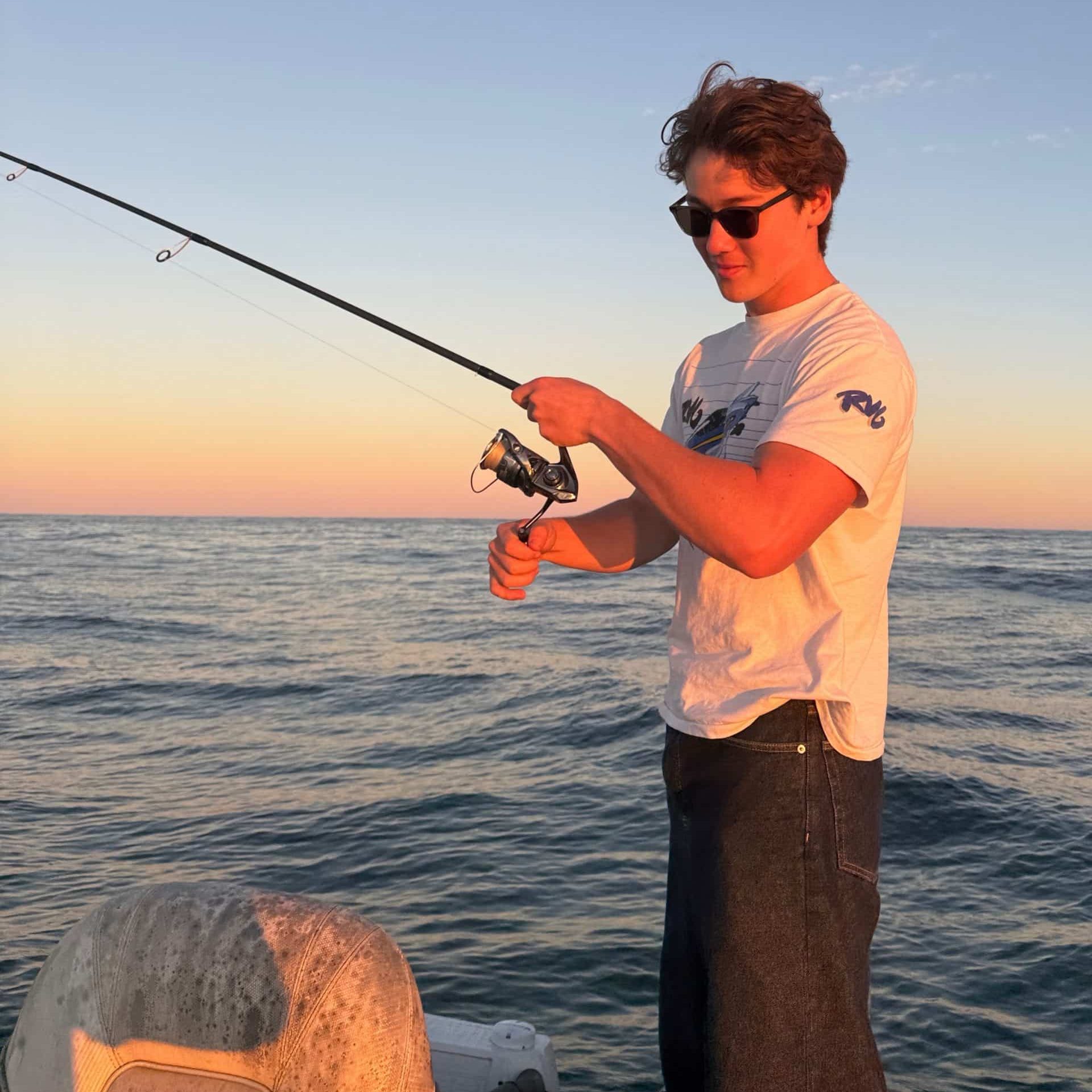
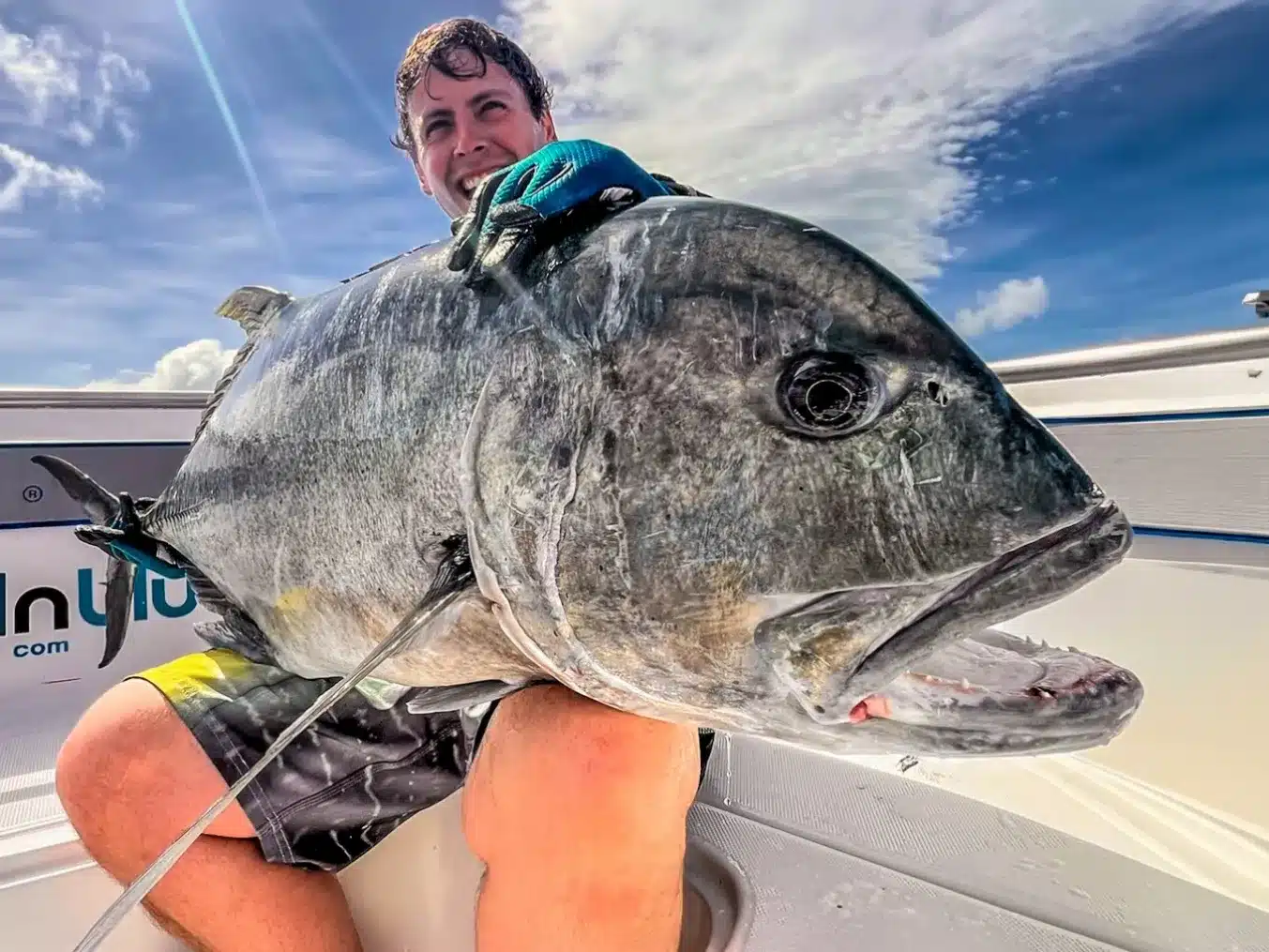
When you fish with us in Vanuatu, we use popping, stickbaiting, vertical jigging, trolling and live baiting. The right technique depends on the target species, the season, wind, current, bait and the fish activity we find on the day. Rather than following one fixed program, we read the water and choose the presentation that gives our guests the best available opportunity.
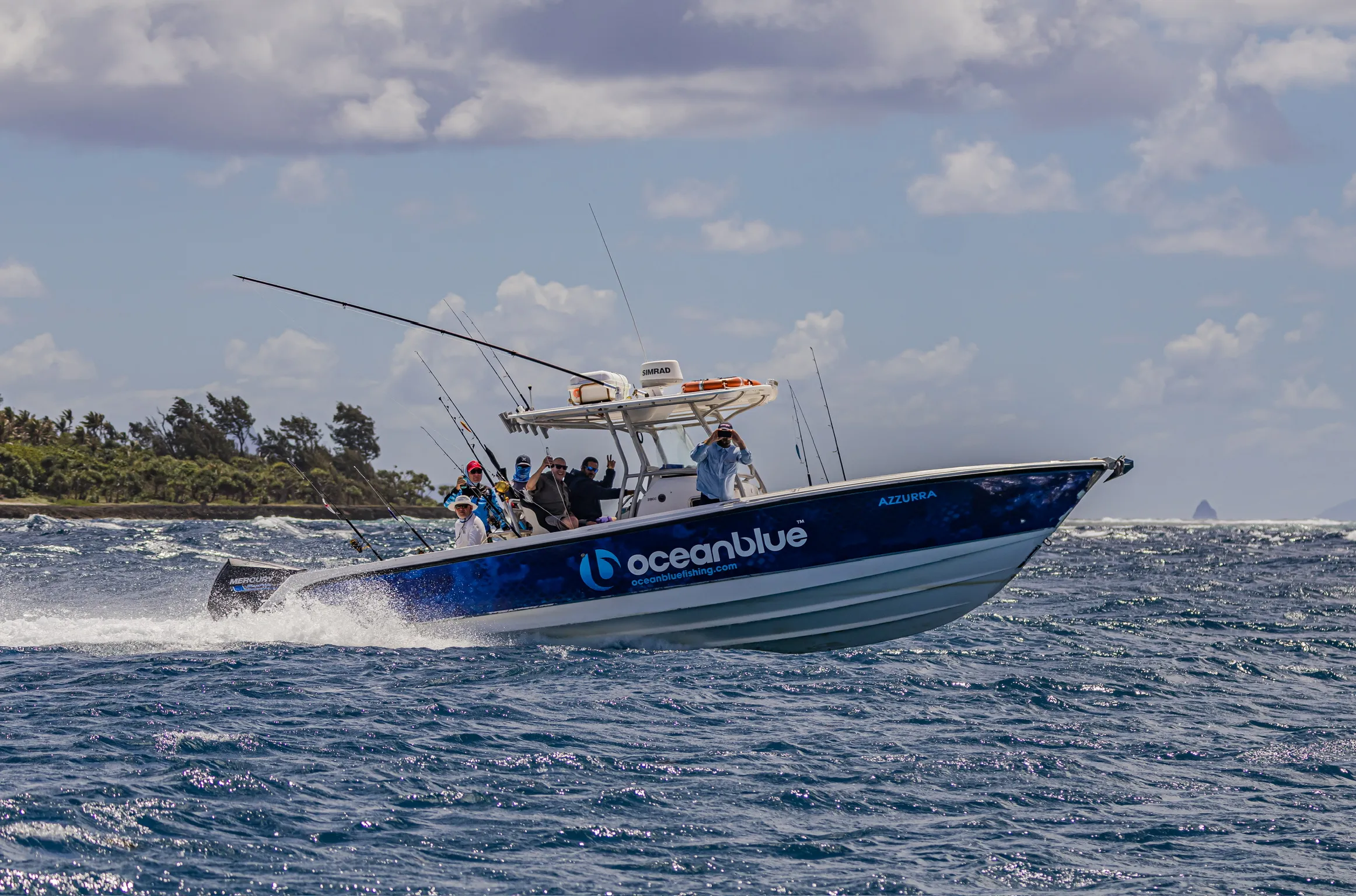
Our fishing takes place from our EdgeWater 318CC Centre Console Sport Fishers, with Trees and Fishes Private Retreat as our lodge base. We provide the core charter rod-and-reel setups, professional crew and local knowledge, while guests are welcome to bring personal lures, jigs and favourite tackle if they enjoy fishing their own equipment.
Key Takeaways
Which Fishing Techniques Do We Use in Vanuatu?
Vanuatu gives us the flexibility to fish across blue water, reef edges, deeper structure and current lines. That is why our program is built around technique selection rather than a single method. A morning may begin with a trolling spread while we search open water, move into casting at surface activity, then finish with jigs over deeper ground if fish are holding below the boat.
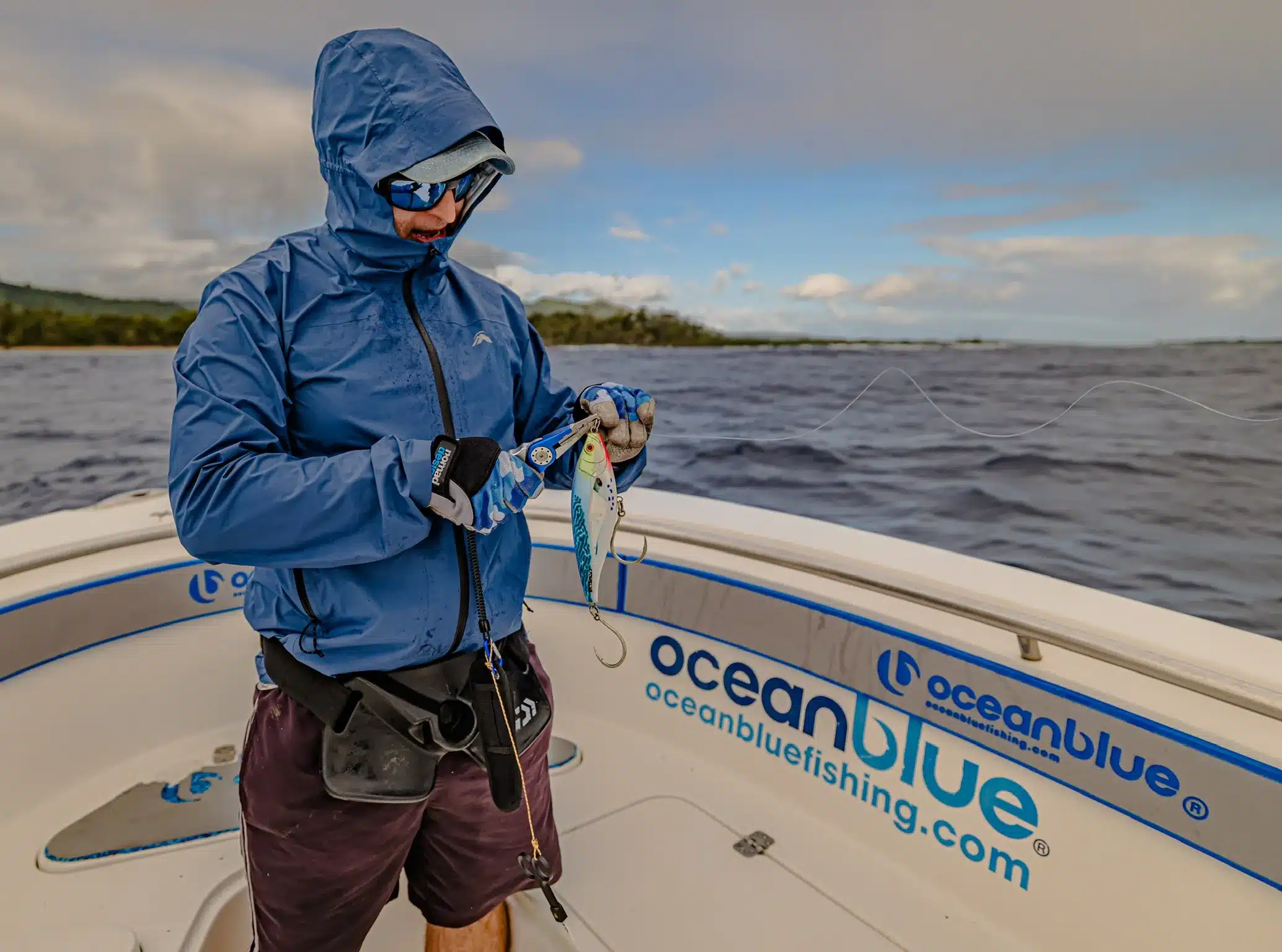
Every technique asks something different of an angler. Popping can be physically demanding but delivers spectacular surface strikes. Stickbaiting rewards a controlled baitfish-style retrieve. Jigging requires rhythm and awareness of the strike zone. Trolling lets us search efficiently. Live baiting is a precise option when natural presentation offers the right opportunity.
When Do We Use Poppers in Vanuatu?
A popper is a surface lure with a cupped face. As we work it, the lure creates splash, noise and a bubble trail that can draw a fish up from below. We use poppers when we want a strong surface signal — particularly around reef edges, pressure points, FADs and wind-ruffled water.
Popping is a major part of our tropical topwater program. When we are targeting Giant Trevally, we often use larger poppers in the 15-25 cm range, while the final size and profile are chosen according to the water, bait and target species.
How Do We Work a Popper?
The retrieve is designed to make the lure look alive and easy to locate. Our crew will show you how to make controlled pops, use a longer sweep when it suits the lure, and pause at the right point in the retrieve. The aim is not simply to make as much splash as possible; it is to create a consistent action that matches the conditions and keeps the lure working effectively until the fish commits.
Poppers suit anglers who want to be actively involved in every cast. When a fish tracks, swirls or strikes at a surface lure, our crew will coach you through the next moment so you can stay composed and connected.
For the specific popper models, hooks and rings we recommend to guests bringing their own lures, see our Vanuatu 2026 Lure Guide.
When Do We Use Stickbaits Instead of Poppers?
We use stickbaits when a more natural baitfish-style presentation is the better fit for the conditions. In calmer water, or when fish are following without fully committing to a loud surface lure, a stickbait can provide a subtler action. Stickbaits are also easier on the angler over a long casting session because they create less resistance than a cup-face popper.
Our stickbait fishing can involve floating pencil lures, surface-skipping lures, glide-style lures and sinking stickbaits. The action changes with the design and the retrieve: some models can be swept to dive and glide, while others skip across the surface like a fleeing baitfish. We select the action that best matches the fish behaviour we are seeing.
The PE7-8 casting setup is our published all-round option for this work: an 8000-10,000 high-speed spinning reel, 80 lb braid and 180 lb monofilament leader. We use it for casting stickbaits at Yellowfin Tuna, Coral Trout and smaller GTs while retaining enough power for Vanuatu’s hard-fighting fish.
Our Yellowfin Tuna Fishing in Vanuatu guide explains how we use stickbaits and poppers around surface-feeding tuna, birds, FADs and blue-water activity.
How Do We Jig in Vanuatu?
Vertical jigging lets us present a metal lure well below the surface. We use it around reefs, steep drop-offs, deeper ground and FADs when the sounder, bait or fish activity shows that the opportunity is lower in the water column.
The technique involves dropping a metal jig to the required depth, then working it through the strike zone with a deliberate lift-and-retrieve rhythm. Current and depth influence both the jig weight and the way the lure fishes, which is why our crew sets the plan for each drift.
When Does Jigging Become the Right Choice?
We use jigs when surface activity ends, when fish are marked below the boat, or when deeper structure is holding fish. In our seasonal guidance, we describe using knife jigs below birds when the surface bite has shut down, and working heavy jigs over seamounts and ledges for Dogtooth Tuna.
We provide the core jigging setups. Guests who enjoy using personal metal jigs are welcome to bring them, and we recommend carrying substantial jigs plus spare assist hooks, split rings and other terminal tackle. We will advise on the right jig weight for the depth, drift and current before each drop.
When Do We Troll for Marlin, Wahoo and Tuna?
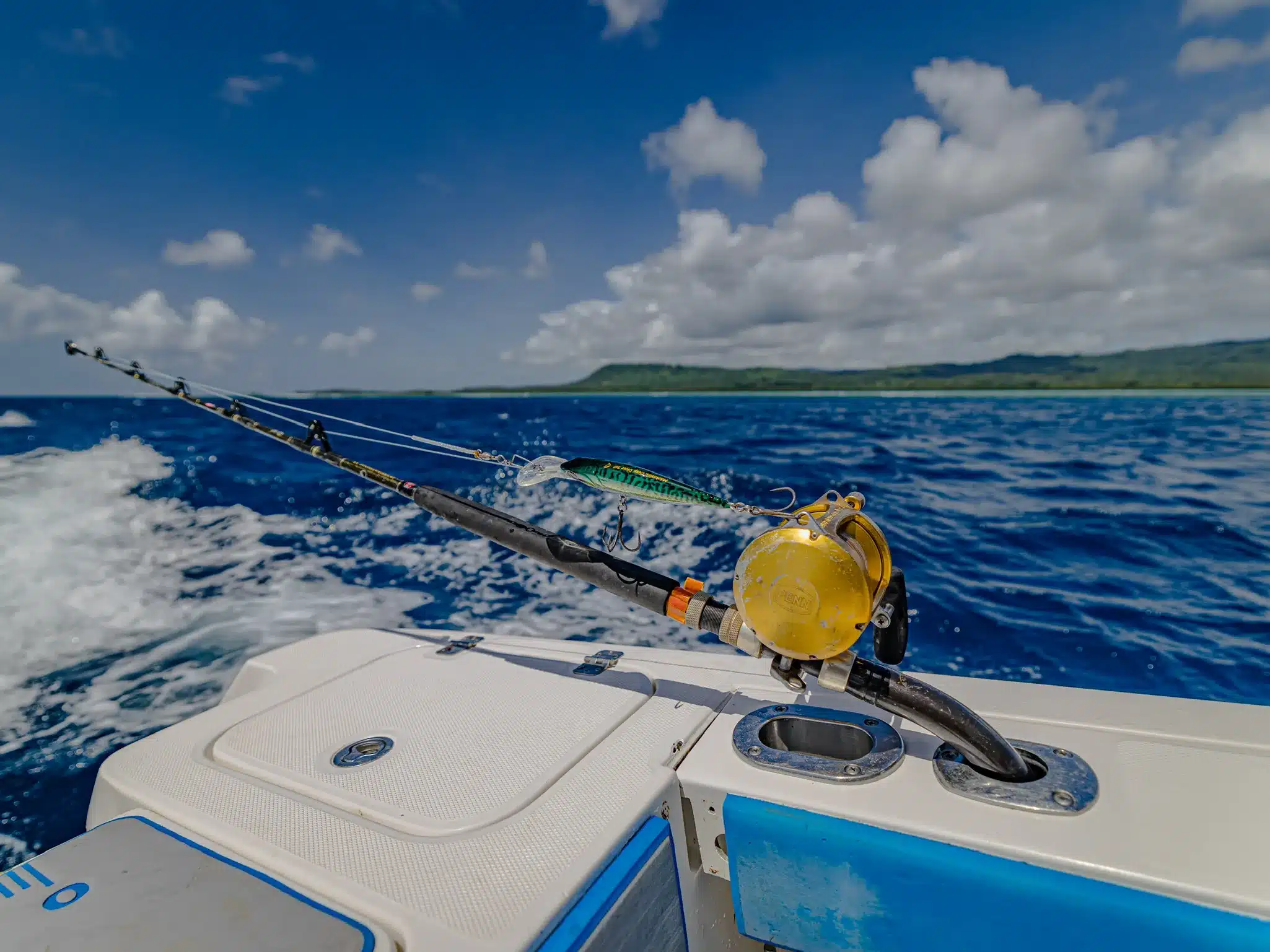
Trolling is how we cover water, investigate blue-water edges and keep presentations working while we search for the next feeding zone. We can troll skirted lures, hard-body lures and other presentations selected to suit the species, location and conditions.
In our September-to-December technique guide, we use mixed trolling spreads for marlin, with a combination of long lures, short lures and a teaser or teaser chain when appropriate. We troll at 7-9 knots for marlin, while faster Wahoo trolling lanes may call for 12-18 knots.
Trolling also creates transition opportunities. While moving between current lines, bait activity, FADs and offshore areas, we can keep a spread working and stay ready to change to casting or jigging once fish show themselves.
Our game-fishing charter gear includes one 30 lb outfit, two 50 lb outfits and one 70 lb outfit on each boat. Guests can bring a favourite personal trolling lure if they wish; before travel, please speak with us so we can help you choose a lure that suits the likely target species and the way we will set the spread.
How Do We Use Live Bait in Vanuatu?
Live baiting is a deliberate technique we use when a natural presentation gives us the right opportunity. We may catch bait such as bonito or rainbow runners, then slow-troll them over drop-offs or use them around structure and feeding areas. Our published winter guide identifies live baiting as a method for Marlin, Dogtooth Tuna and large GTs.
Live bait is especially useful when a fish is following but needs a more convincing presentation, when we are working a productive pressure point, or when the day’s activity suggests a natural bait is the best option. The crew rigs and manages the presentation while explaining what is happening, so guests can understand the technique and be ready for the take.
“We do not force one technique all day. We use the conditions, bait and fish activity in front of us to decide whether casting, jigging, trolling or live baiting gives our guests the best opportunity.”
Spike Lieberman, Ocean Blue Fishing
How Do We Choose the Right Technique on the Day?
Our decision-making starts with the water. We assess the conditions, the season, wind direction and strength, current, bait activity, sea state, depth and the species our guests most want to target. We then choose a starting method and adjust as the day develops.
The advantage for guests is that you do not need to arrive knowing every technique. Our crew will explain what we are doing, set up the gear and coach you through each method. Anglers with their own experience can fish more hands-on, while first-timers can learn progressively throughout the trip.
What Fishing Gear Do We Provide, and Can Guests Bring Their Own?
We equip our boats with the core fishing gear needed for our charter program. Our published charter range covers heavy popping, medium and light jigging, light casting, game fishing and heavy deep-drop applications.
Guests bringing personal tackle should let us know before travel. That gives us time to discuss your target species, preferred technique, rod ratings, lure types and the practical tackle pack that will add the most value to your trip. Our Vanuatu Fishing Holiday Packing Checklist covers the wider clothing, travel and personal-item planning.
When Is the Best Time to Use Each Technique in Vanuatu?
We fish Vanuatu year-round, but the species mix and weather patterns shape the techniques we are most likely to use. Our fishing-seasons guide divides the year into three planning periods: January-April for the prime big-fish season; May-August for the widest species variety; and September-December for the spawning season and increasingly active feeding.
The seasonal framework helps us plan, but it never replaces the decisions we make on the water. Each day is shaped by the actual conditions and fish activity we encounter.
Frequently Asked Questions
The most effective technique depends on the species, the season and the conditions we find. We use popping, stickbaiting, jigging, trolling and live baiting because each method offers a different way to reach active fish. We choose the best starting technique on the day and adapt as the situation develops.
Guests of all experience levels can fish with us. Our crew will demonstrate the cast, retrieve and hook-up process, then help you develop a rhythm that suits the lure and your ability. More experienced anglers are welcome to fish their own preferred topwater lures and setups.
Popping uses a cup-face lure to create strong splash and surface disturbance. Stickbaiting uses a baitfish-style lure that can glide, skip or sink with a more natural action. We commonly favour poppers in windier or rougher conditions and stickbaits in calmer water or when a subtler baitfish presentation suits the fish activity.
Yes. We use heavy vertical jigging around deeper structure and drop-offs when conditions and target species call for it. Our heavy jigging baseline is a PE8 rod, 100 lb braid and 200 lb monofilament leader, selected for demanding reef-edge fights.
Yes. Personal lures, jigs and terminal tackle are welcome. Please contact us before travel so we can help you plan a focused personal tackle selection that suits your fishing dates, target species and preferred style. Our crew can also help you select the right option from your pack on the day.
Yes. We provide the core rod-and-reel setups for our charter fishing program, together with the boat, experienced crew and local knowledge. Personal tackle is optional for guests who want to fish their own preferred equipment.
Fish Vanuatu With the Right Technique for the Day
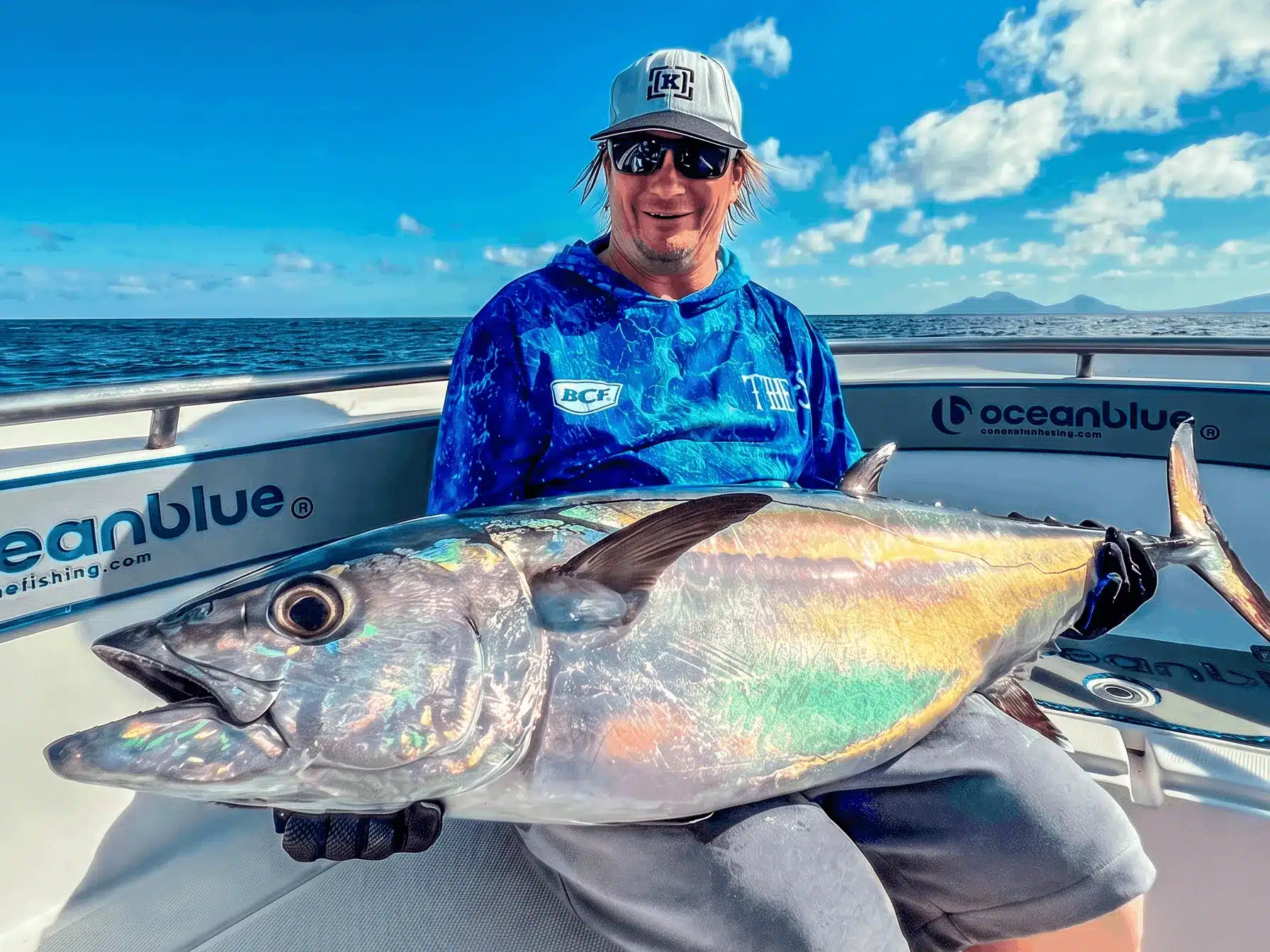
The fishing in Vanuatu is diverse because each day can present a different opportunity. You may start casting a stickbait into surface activity, move to a popper over an active reef edge, drop a jig through deeper water and finish the day trolling blue water on the way home.
That is the experience we build at Ocean Blue: a flexible, guide-led fishing day that uses the right technique for the fish and conditions in front of us. Tell us the species you hope to target, the techniques you enjoy and whether you would like to bring personal tackle. We will help you plan a Vanuatu fishing adventure that puts those preferences into the best possible context.
Explore our Vanuatu Fishing Adventures and request your tailored trip plan.